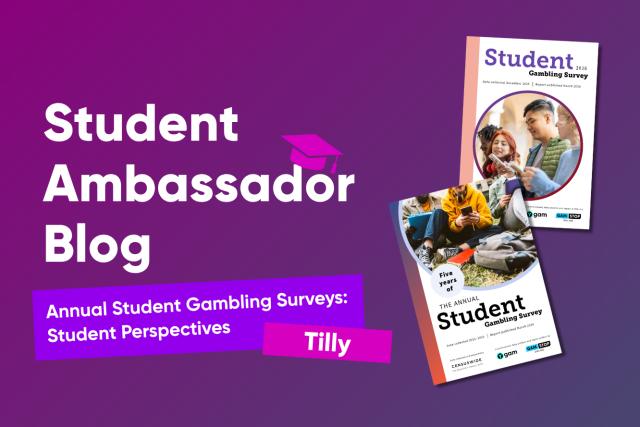
Over the last five years, students’ awareness and understanding surrounding gambling harms has begun to shift quietly. In a society flooded with gambling harms, it’s easy to feel down heartened, but recent data provides us with small areas of improvement that are worth celebrating. By looking at trend analysis from the last five years, progress is easy to see – not just through one stat, but through many areas that point to increased awareness, reduced participation, and improved access to support.
In contrast to the rise in advertising and the effect of social media, gambling participation has been slowly declining over the last 5 years. Between 2022 and 2026, participation in gambling fell by 13 percentage points, from 78% to 65%. This is incredibly important, as it shows in visible terms the hopeful prospect that fewer students are engaging with gambling, even though gambling promotion in the media and wider society is at an all-time high. This may also reflect a broader cultural shift, with young people becoming more aware of the risks surrounding gambling.
To accompany this decline, awareness of available support within the university and of online resources has increased across the student population. Among students who gamble, awareness has risen from 54% to 58% over the last five years. This is great, as it increases the visibility of support and resources, enabling young people to reach out when they feel they would benefit.
Another notable statistic is the awareness of available support among non-gambling young people, increasing from 45% to 53%. This suggests that this awareness is reaching a wider audience, both those directly impacted by gambling harms and those who may know someone or want to be more educated. As a result, the hope here is that students may be better equipped to recognise early signs of harm – either in themselves or others – and act sooner.
However, awareness alone isn’t always enough – students would also benefit from feeling confident to access this support when they need it. The five-year trend analysis has provided a very encouraging insight, suggesting the proportion of students who gamble and feel confident accessing their university’s support services has increased from 60% in 2022 to 69% in 2026. It is incredibly encouraging to imagine support systems becoming more visible, approachable and trusted. On a practical level, this holds out hope that said confidence will inevitably lead to earlier intervention and decreased risk of harm.
Most importantly, these promising shifts are reflected in the reduction in gambling-related harm. Since 2023, the proportion of students who gamble experiencing harm (as measured by the short-form PGSI) has decreased from 24% to 18%. This suggests a real, tangible difference is being made within the student population.
So, what’s the takeaway? These trends are incredibly encouraging! While there is still work to be done and improvements to be made, the progress over the last five years has been incredibly significant. From this, we can recognise what is working and continue to build on it to create a safer environment for our young people.