
Safety controls
Our guide to help you create safer gaming environments for children and young people.
Tha sinn dìreach air an làrach-lìn ùr againn a chur air bhog, feuch an roinn thu do bheachdan ann an dìreach 5 mionaidean.

The PEGI (Pan-European Game Information) rating system exists to help adults make informed decisions about game content for the children and young people in their care.
PEGI includes five categories, based on a game’s suitability for children by age rather than difficulty. In creating the ratings, factors like violence, language and gambling content are considered.
This information is courtesy of PEGI. For more details, please visit pegi.info.
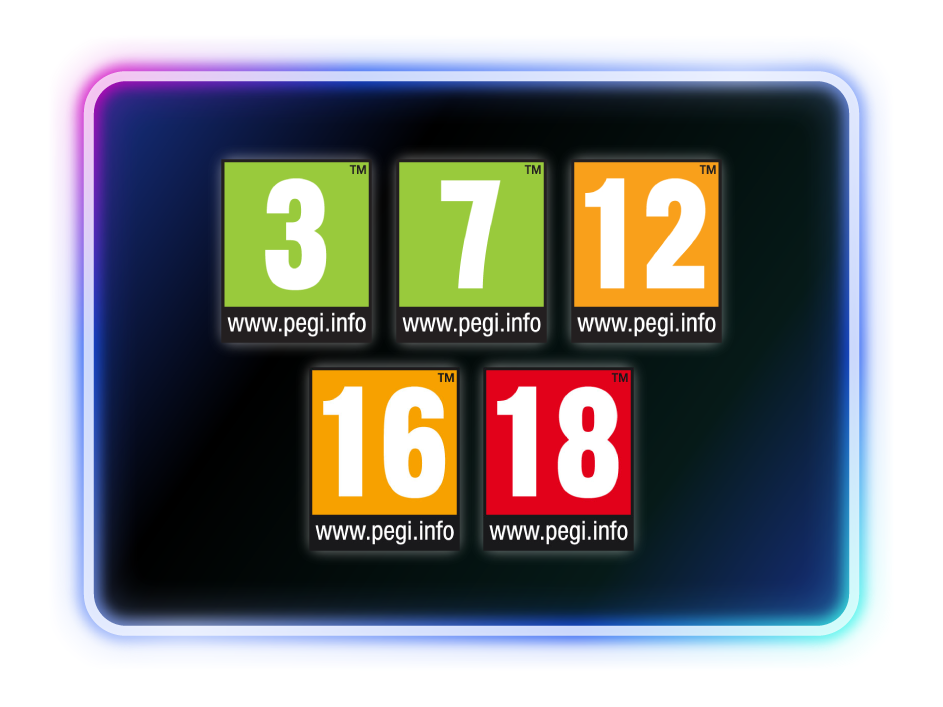
Suitable for all age groups. The game should not contain any sounds or pictures that are likely to frighten young children. Very mild forms of violence (in a comical context or a childlike setting) are acceptable.
May contain some scenes or sounds that could be frightening to younger children. Very mild forms of violence are acceptable.
Suitable for children aged 12 and over. Games in this category may contain violence of a slightly more graphic nature towards fantasy characters or non-realistic violence towards human-like characters. Sexual innuendo or mild bad language can also be present.
Suitable for older teenagers. This rating is applied once the depiction of violence or sexual activity reaches a stage that looks the same as would be expected in real life. The use of bad language can be more extreme, and the use of tobacco, alcohol, or illegal drugs can also be present.
Suitable for adults only. The level of violence reaches a stage where it becomes a depiction of gross violence, apparently motiveless killing, or violence towards defenceless characters. Explicit sexual activity, glamorisation of illegal drug use, and gambling simulations are also included.
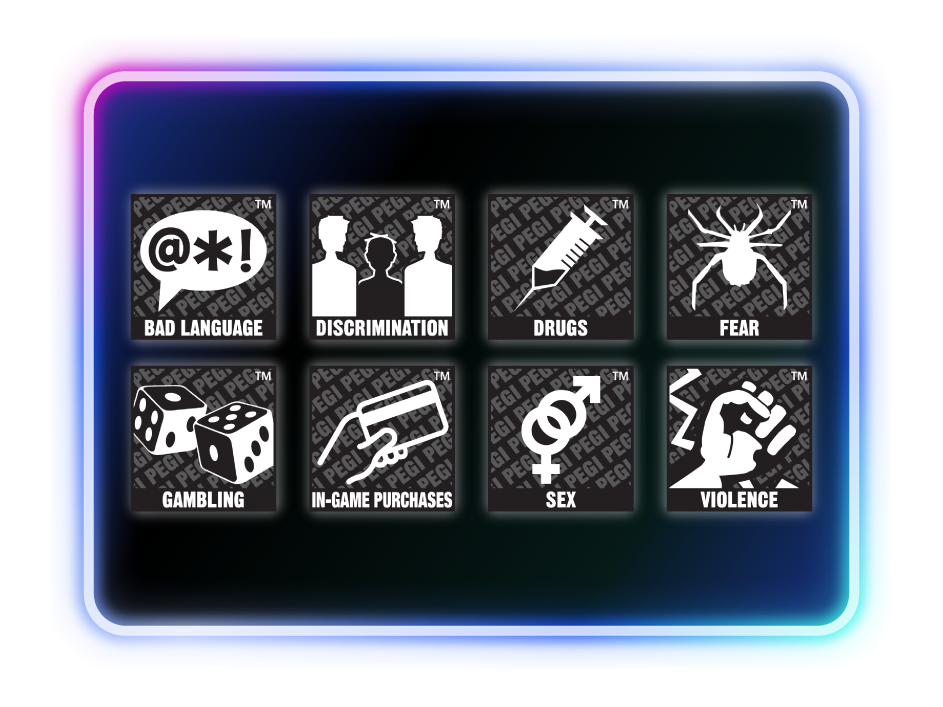
Content descriptors are short descriptions provided by PEGI that explain why a game received its age rating. They highlight specific themes or elements that may influence whether a game is suitable for your child. These descriptors go beyond age ratings to give you insight into what your child will experience in the game.
Common themes include:
You’ll find content descriptors on game packaging, digital store pages, or rating websites.
Many popular video games include mechanics that mimic gambling, such as loot boxes, prize wheels, or random chance purchases. These features encourage repeated spending and can lead to other gambling behaviour.
Gambling-style mechanics are not usually listed on the physical game case or on a store website in a clear way.
When you search for the game online or read game reviews, look out for:

It’s important to ensure that the right safety features are in place within the game, so that your child is safeguarded effectively from prospective digital harms.
Useful safety controls include:
Setting up safety controls on gaming platforms can feel daunting at first, but it’s a crucial step in keeping young people safe.

Navigating the online world can be daunting for adults in positions of care due to the rapid influx of new apps, technologies, and terms.
While there is pressure to monitor and control digital interactions, the focus should be on engaging young people with digital safeguarding and highlighting the positives of video gaming, while enabling discussions about the risks.
Try to:

Join thousands of parents and professionals we've trained to support children and young people. Our free workshops give you the knowledge and confidence to prevent the harms of gaming and gambling.
Our guide to help you create safer gaming environments for children and young people.

Understand the multiple ways that games offer to spend money within their virtual worlds.

If you're concerned about a young person experiencing gaming or gambling harms, support is available.