

1. Find the PEGI rating
The PEGI (Pan-European Game Information) rating system exists to help adults make informed decisions about game content for the children and young people in their care.
PEGI includes five categories, based on a game’s suitability for children by age rather than difficulty. In creating the ratings, factors like violence, language and gambling content are considered.
This information is courtesy of PEGI. For more details, please visit pegi.info.
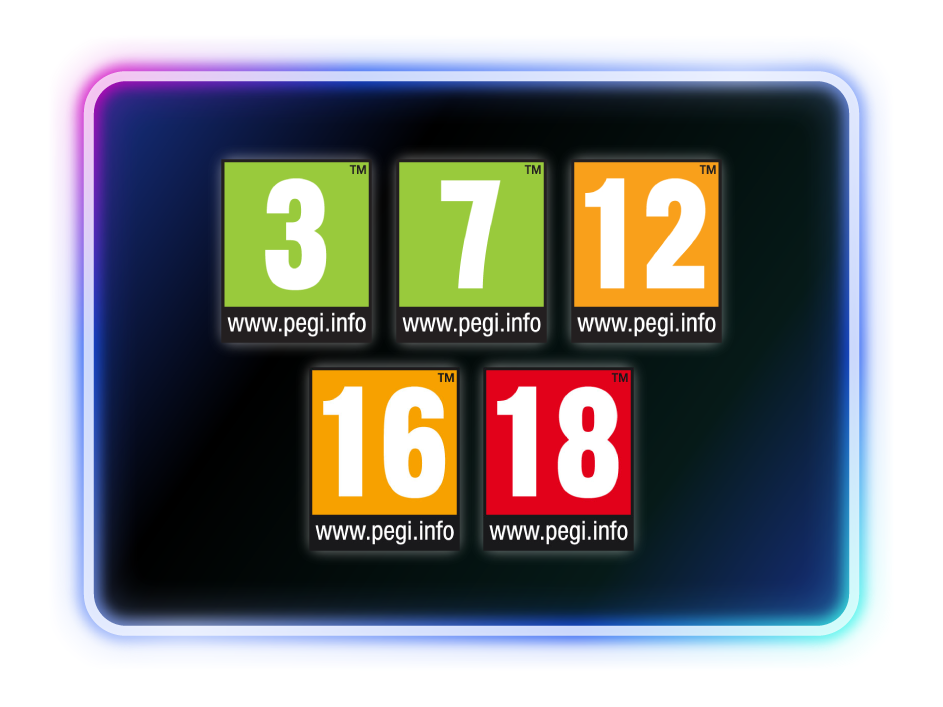
Suitable for all age groups. The game should not contain any sounds or pictures that are likely to frighten young children. Very mild forms of violence (in a comical context or a childlike setting) are acceptable.
May contain some scenes or sounds that could be frightening to younger children. Very mild forms of violence are acceptable.
Suitable for children aged 12 and over. Games in this category may contain violence of a slightly more graphic nature towards fantasy characters or non-realistic violence towards human-like characters. Sexual innuendo or mild bad language can also be present.
Suitable for older teenagers. This rating is applied once the depiction of violence or sexual activity reaches a stage that looks the same as would be expected in real life. The use of bad language can be more extreme, and the use of tobacco, alcohol, or illegal drugs can also be present.
Suitable for adults only. The level of violence reaches a stage where it becomes a depiction of gross violence, apparently motiveless killing, or violence towards defenceless characters. Explicit sexual activity, glamorisation of illegal drug use, and gambling simulations are also included.
2. Check the video game content descriptors
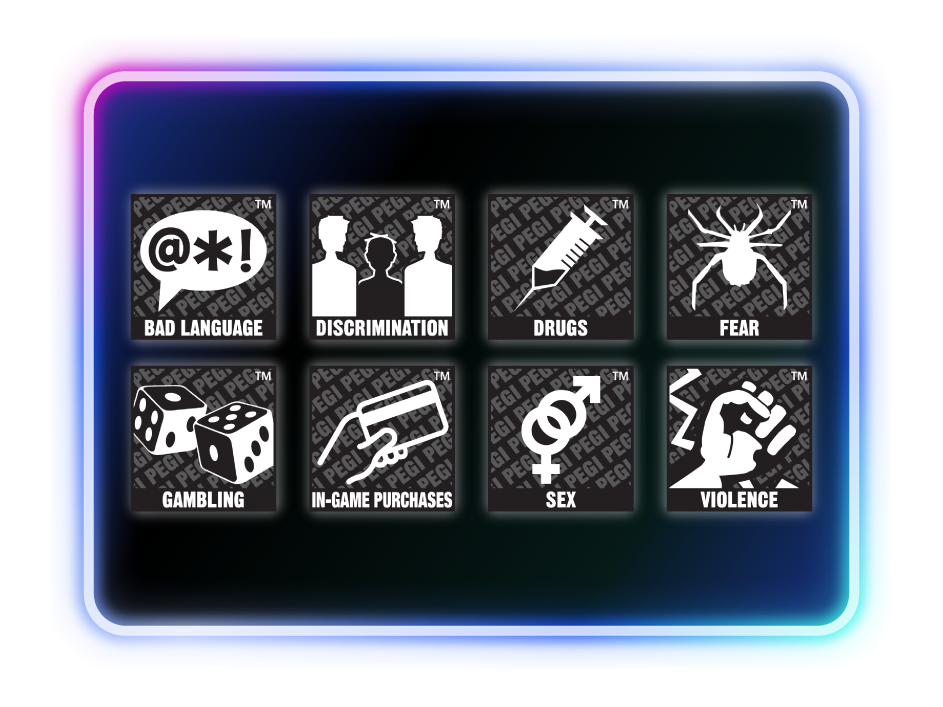
Content descriptors are short descriptions provided by PEGI that explain why a game received its age rating. They highlight specific themes or elements that may influence whether a game is suitable for your child. These descriptors go beyond age ratings to give you insight into what your child will experience in the game.
Common themes include:
- Violence
- Sexual Content or Nudity
- Strong Language
- Horror or Fear
- Drug and Alcohol References
- In-Game Purchases
You’ll find content descriptors on game packaging, digital store pages, or rating websites.
3. Look for gambling-style features
Many popular video games include mechanics that mimic gambling, such as loot boxes, prize wheels, or random chance purchases. These features encourage repeated spending and can lead to other gambling behaviour.
Gambling-style mechanics are not usually listed on the physical game case or on a store website in a clear way.
When you search for the game online or read game reviews, look out for:
- Chance-based rewards (e.g., opening packs or crates)
- In-game currencies that can be purchased with real money
- Pressure to buy limited-time offers or upgrades
- Promotional or paid content.

4. Set up safety controls
It’s important to ensure that the right safety features are in place within the game, so that your child is safeguarded effectively from prospective digital harms.
Useful safety controls include:
- Spending limits
- Censored communication
- Screen time management
- Block / report inappropriate content
在遊戲平台上設定安全控制,一開始可能會覺得很艱難,但這是確保青少年安全的重要一步。

5. Talk to your child about gaming safely
Navigating the online world can be daunting for adults in positions of care due to the rapid influx of new apps, technologies, and terms.
While there is pressure to monitor and control digital interactions, the focus should be on engaging young people with digital safeguarding and highlighting the positives of video gaming, while enabling discussions about the risks.
Try to:
- Take an interest in the games they love
- Understand why they enjoying playing video games
- Co-develop solutions to any concerns or anxieties
- Educate yourself about the types of games or a certain game’s content

想要加深瞭解嗎?
加入成千上萬的家長和我們訓練過的專業人員的行列,為兒童和青少年提供支援。我們的免費研討會讓您獲得預防遊戲和賭博危害的知識和信心。


需要立即支援?
如果您擔心年輕人受到遊戲或賭博的傷害,我們可以提供支援。