The debate around age-based restrictions on social media often focuses on access. However, the more important question is whether online environments are designed to be safe for children and young people in the first place.
We work alongside thousands of parents, teachers, and carers supporting children and young people every week across the UK. Across those conversations, there is one consistent message: a clear call for government action to remove the risks children face when accessing social media at such a young age.
Parents come at this from different perspectives, all equally valid. But from a safeguarding point of view, both at home and beyond, it is increasingly clear that the benefits of social media do not outweigh the risks and harms it presents to children and young people.
Minimum age requirements should be based on the risks posed by a service’s content and design, not simply its category. For example, it could be argued that platforms that facilitate the active and widespread promotion of gambling should be restricted to those aged 18 and over.
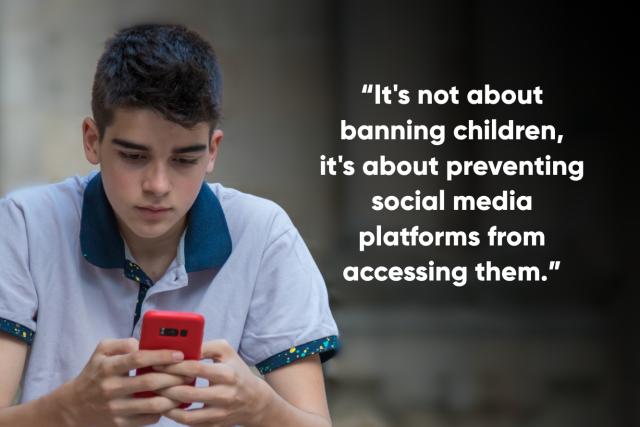
This is not about banning children from social media. It is about preventing platforms that are not designed with their wellbeing in mind from having access to them.
Social media plays an increasingly important role in Ygam’s preventative education work because of its close connection to gaming, gambling, and the digital world in which children and young people spend much of their time.
Evidence of harm is already clear. Social media platforms are built to maximise engagement, not wellbeing. Features such as algorithmic recommendations, autoplay, influencer-driven content, and targeted advertising are designed to capture and retain attention, encouraging users to spend more and more time on these digital platforms. While moderation systems continue to evolve, harmful or inappropriate content can still spread rapidly and reach large numbers of children and young people before it is identified and removed.
Ygam recognises that a social media ban is not a complete solution. Online harms are fast-moving and systemic. We also recognise that implementing any ban would not be straightforward, particularly in relation to restricting access for young people who are already using social media. There is also the potential for unintended consequences, including the emergence of unregulated spaces where safeguards and protections are absent.
But complexity should not become a barrier to action.
The most significant benefit of an age-based restriction may not be immediate, but cultural. Just as we deliver education to help prevent harms associated with gambling, gaming, and other risk-related behaviours, we need to equip young people with the awareness and resilience they need before they access social media. This includes educating and supporting children to understand risk so that, when they eventually encounter these environments, they are better prepared to navigate them safely.
However, education alone cannot compensate for environments that are not designed to be safe.
Children and young people report exposure to hateful content, particularly targeting identity and appearance, which can affect confidence, belonging and mental wellbeing. Others describe compulsive patterns of use, disrupted sleep, reduced concentration, and increasing anxiety linked to constant connectivity and endless feeds. These are not isolated experiences. They are structural outcomes of how platforms are designed.
Gambling marketing is particularly prevalent across social media and online platforms. It is often embedded within wider entertainment, influencer, and sports content, making it increasingly difficult for children and young people to distinguish between advertising and organic content. As a result, repeated exposure can contribute to the normalisation of gambling behaviours and attitudes from an early age. Children are being exposed to commercial influence in ways that are difficult to see, let alone regulate effectively.
Research led by Dr Rafaello Rossi in 2021 (“Get a £10 Free Bet Every Week!”- Gambling advertising on Twitter: Volume, Content, Followers, Engagement and Regulatory Compliance) found that around 41,000 children in the UK actively follow gambling-related accounts on X (formerly Twitter). Analysis of large-scale data covering more than 880,000 UK gambling advertisements and user engagement across approximately one million users highlighted significant exposure of children and young people to gambling advertising online.
A 2025 report published by Sherbert Research and The Culture Studio (The appeal of celebrity ambassadors to children & young people aged 11-17) identified that 79% of young people aged 11-17 said there should be more rules around gambling content/advertising on social media, with 56% sharing that they see too much content and advertising online about gambling.
If platforms cannot consistently ensure that children and young people are exposed only to age-appropriate content and advertising, they should not assume an automatic right of access to them. It is about setting clear boundaries on platform access where systems repeatedly fail to meet basic safety expectations.
When Ygam’s Youth Advisory Panel was asked about a potential social media ban, views were mixed and thoughtful. When it comes to social media, they explained they are most concerned about unwanted contact from adults online, exposure to age-inappropriate or harmful content, and the spread of misinformation and misleading material. The young people on the panel saw value in delaying exposure to social media, and daily limits on apps were generally viewed positively. However, they also raised legitimate concerns about circumvention and unintended consequences and noted that any ban could potentially limit their access to knowledge, learning, and social connection.
It shows there is no easy answer, but we have reached a point where maintaining the status quo is no longer an option. Accountability must shift to platforms to ensure safety by design is an essential part of their business model, with the wellbeing and safety of children at its core.
When harms outstrip children’s ability to protect themselves, government has a duty to act. That means removing children as users of social media as the only proportionate response to the scale of risk.